Drywall Installation Cost (2026): Per Sq Ft, Room & House
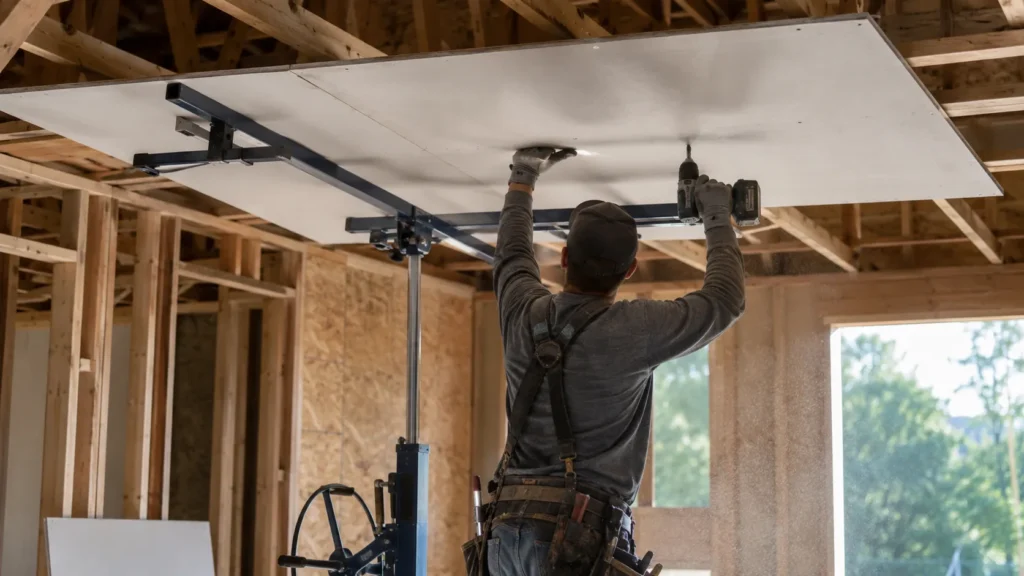
Quick answer: Drywall installation costs $1.50 to $3.50 per square foot installed (materials + labor, standard Level 4 finish) as of 2026. That’s about $720–$1,680 for a 12×12 room, $1,500–$3,500 for 1,000 sq ft of drywall surface, and $7,875–$18,375 to drywall a 1,500 sq ft house (walls and ceilings combined). Materials alone run $0.75–$1.25 per sq ft; labor alone runs $0.75–$2.25 per sq ft depending on your market and finish level.
Everything below breaks that number down by room, by house size, by sheet, and by labor phase — separated out specifically because quoting “hanging only” at a full-install rate is one of the most common ways a bid gets padded, and splitting the phases apart is the easiest way to catch it before you sign anything. There’s also one distinction almost every online drywall cost guide gets wrong: the difference between your home’s floor area and its drywall surface area. Confusing the two is why homeowners searching “how much would it cost to drywall a 1,500 sq ft house” get wildly different answers depending on where they look.
The Floor-Area vs. Surface-Area Mistake
If you search “how much does it cost to drywall a 1,000 sq ft house,” most calculators quietly answer a different question: the cost to drywall 1,000 sq ft of panel surface, not a 1,000 sq ft house.
Here’s why that matters. A single-story home with 1,000 sq ft of floor area typically needs 3,000–4,000 sq ft of actual drywall panels once you account for every wall (measured floor-to-ceiling, both sides where applicable) and every ceiling. As a rule of thumb, multiply your home’s floor area by 3 to 4× to estimate total drywall surface area for a standard 8–9 ft ceiling height. Higher ceilings, multiple stories sharing floor plates, and heavily partitioned floor plans push that multiplier higher; open-concept layouts with fewer interior walls push it lower.
This is the single biggest reason two “drywall cost calculators” can give you numbers that are 3× apart for the same house — one is quoting surface-area cost, the other is quoting (or implying) floor-area cost. Every number in this guide states clearly which one it’s using.
Drywall Installation Cost Per Square Foot (2026 Benchmarks)
| Cost Component | Price Per Sq Ft (2026) | What’s Included |
|---|---|---|
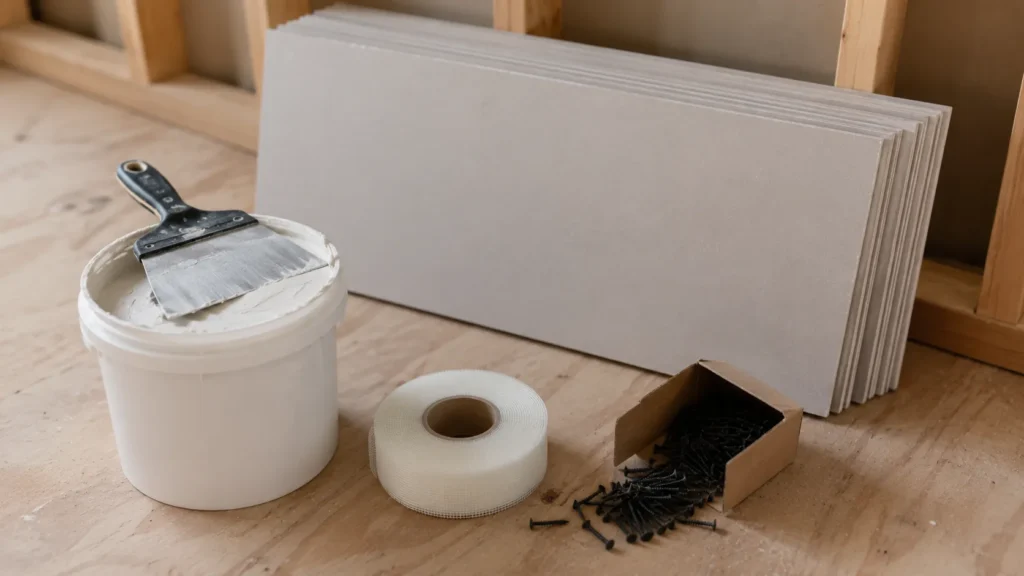
| Materials only | $0.75 – $1.25 | 1/2″ standard panels, screws, joint tape, compound |
| Labor only (full install) | $0.75 – $2.25 | Hanging, taping, mudding, sanding to Level 4 finish |
| Full installed cost | $1.50 – $3.50 | Materials + labor, ready to prime and paint |
| 2026 national average point estimate | ~$2.40 – $2.50 | Midpoint of current Homewyse and Nedes Estimating benchmarks |
Material pricing has been moving in 2026, not just holding steady. CertainTeed, USG, National Gypsum, and American Gypsum all issued gypsum board price-increase notices between January and June 2026 — CertainTeed’s notice alone covers increases up to 20–30% on parts of its wallboard line. The U.S. producer price index for gypsum products stood at 403.12 as of April 2026 (Federal Reserve data via Statista), continuing a multi-year climb. If a materials quote you’re holding is more than a couple of months old, it’s worth asking your supplier to re-confirm board pricing specifically — separate from labor — before you finalize a budget.
Labor is the swing factor beyond materials. In the Southeast and Midwest, full installation commonly lands at $1.25–$1.75 per sq ft. In coastal metros — San Francisco, New York, Boston, Seattle — labor-heavy union markets can push full installed cost to $2.50–$4.00 per sq ft for identical scope of work. Get a local quote before locking a budget; national averages are a starting point, not a promise.
Finish level changes the number, too. Level 4 (three coats, primer-ready — the default assumption above) is what most residential jobs specify. Level 5, which adds a full skim coat for glossy paint or harsh lighting conditions, adds another $0.50–$1.00 per sq ft on top.
Cost to Drywall a Room, By Size
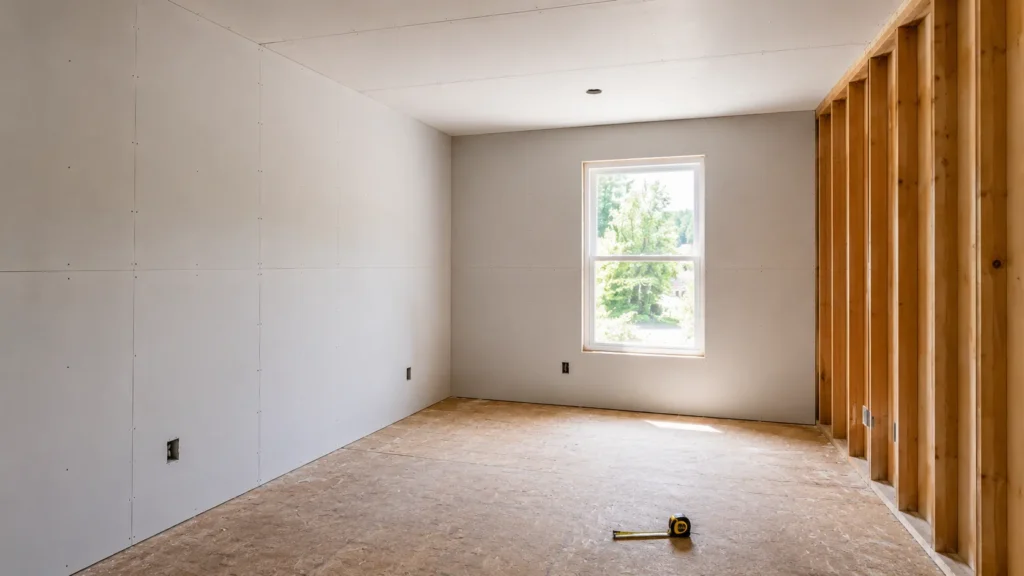
These figures include walls and ceiling, minus a standard allowance for one door and one window, at the $1.50–$3.50 installed range above.
| Room Size | Ceiling Height | Net Drywall Area | Installed Cost |
|---|---|---|---|
| 10′ × 12′ | 8 ft | ~440 sq ft | $660 – $1,540 |
| 12′ × 12′ | 8 ft | ~480 sq ft | $720 – $1,680 |
| 12′ × 15′ | 8 ft | ~570 sq ft | $855 – $1,995 |
| 20′ × 20′ | 8 ft | ~1,000 sq ft | $1,500 – $3,500 |
Notice that a 20×20 room works out to almost exactly 1,000 sq ft of drywall surface — which is why “how much does 1,000 sq ft of drywall cost” and “how much to drywall a 20×20 room” have essentially the same answer. If your search led you to one question and you actually meant the other, you’re covered either way.
Cost to Drywall a Whole House, By Square Footage
Using the 3.5× floor-to-surface-area multiplier from above, applied to the $1.50–$3.50 installed range:
| House Floor Area | Est. Drywall Surface Area | Installed Cost Range |
|---|---|---|
| 800 sq ft | ~2,800 sq ft | $4,200 – $9,800 |
| 1,000 sq ft | ~3,500 sq ft | $5,250 – $12,250 |
| 1,200 sq ft | ~4,200 sq ft | $6,300 – $14,700 |
| 1,500 sq ft | ~5,250 sq ft | $7,875 – $18,375 |
| 2,000 sq ft | ~7,000 sq ft | $10,500 – $24,500 |
| 2,500 sq ft | ~8,750 sq ft | $13,125 – $30,625 |
| 3,000 sq ft | ~10,500 sq ft | $15,750 – $36,750 |
These ranges assume standard 8–9 ft ceilings and a typical number of interior partition walls for the home size. Vaulted ceilings, open floor plans with fewer interior walls, or finished basements will shift the multiplier — treat this as a planning range, not a bid.
Drywall represents roughly 15–18% of total interior finish cost on a standard build, consistent with NAHB Cost of Construction Survey proportions and the category breakdown in our house build cost calculator — useful context if you’re budgeting the whole project rather than just the drywall phase.
Drywall Cost Per Sheet & Per Board
Standard drywall comes in 4′ × 8′ sheets (32 sq ft each) — the unit contractors actually price and order by, which is why “cost per sheet” and “cost per board” searches are so common.
| Per Sheet (32 sq ft) | |
|---|---|
| Materials only | $24 – $40 (standard 1/2″ panel; moisture/fire-rated runs $40–$60+) |
| Hang-only labor (no taping/finishing) | $8 – $16 |
| Full installed (hang + tape + finish) | $48 – $112 |
If a contractor quotes you a flat “per sheet” rate for hanging only — common on new-construction jobs where a separate finishing crew tapes and mudsafter — expect $8–$16 per sheet, in line with the $0.25–$0.50 per sq ft hang-only labor rate. A full “hang, tape, finish” quote per sheet should land in the $48–$112 range depending on your market and finish level.
Labor Cost to Hang and Finish Drywall
Labor isn’t one line item — it’s three separate phases, and pricing them separately is how experienced installers (and savvy homeowners comparing quotes) catch a lowball or inflated bid:
- Hanging — cutting and screwing sheets to studs/joists: $0.25–$0.50 per sq ft
- Taping & mudding — covering seams with tape and 2–3 coats of joint compound: roughly 40–50% of total labor cost
- Sanding & finishing — smoothing for paint-ready surface: the remaining 10–20%
Add those phases together and full labor (hang + tape + finish) lands at $0.75–$2.25 per sq ft, matching the labor-only figure in the per-square-foot table above. A contractor who quotes “hanging only” at $1.50/sq ft is quoting you the full-install rate for one-third of the job — that’s the single fastest way to spot an inflated bid when comparing multiple quotes.
Ceiling Drywall Cost (Why It Costs More)
Installing drywall overhead requires a lift or scaffold, more physical effort, and slower, more careful screw placement to avoid sagging seams — which is why contractors typically charge a 10–30% premium over wall pricing for ceiling work. Applied to the standard $1.50–$3.50 wall range, that puts drywall ceiling installation at roughly $1.75–$4.55 per sq ft, with $2–$4 per sq ft being the most commonly quoted range for a straightforward flat ceiling.
Renting a drywall lift runs $40–$60 per day and pays for itself quickly on any ceiling larger than a single small room — trying to hold a 4×12 sheet overhead solo is both a quality risk and a back-injury risk.
Drop Ceiling vs. Drywall Ceiling: Which Is Cheaper?
Drywall is almost always cheaper upfront. A standard drywall ceiling runs $1.50–$3.00 per sq ft installed; a drop (suspended) ceiling runs $2.00–$5.00 per sq ft for standard tiles, and can climb well past $10/sq ft for specialty acoustic or fire-rated panels.
The trade-off isn’t really about cost — it’s about access. Drop ceilings let you pop a tile to reach wiring, plumbing, or HVAC without cutting into anything. Drywall gives you a seamless, resale-friendly finish but means cutting, patching, taping, and repainting every time something above the ceiling needs attention. Basements with a lot of mechanicals overhead are the classic case where a drop ceiling’s easier access outweighs drywall’s lower sticker price and better looks.
DIY vs. Professional Drywall Installation
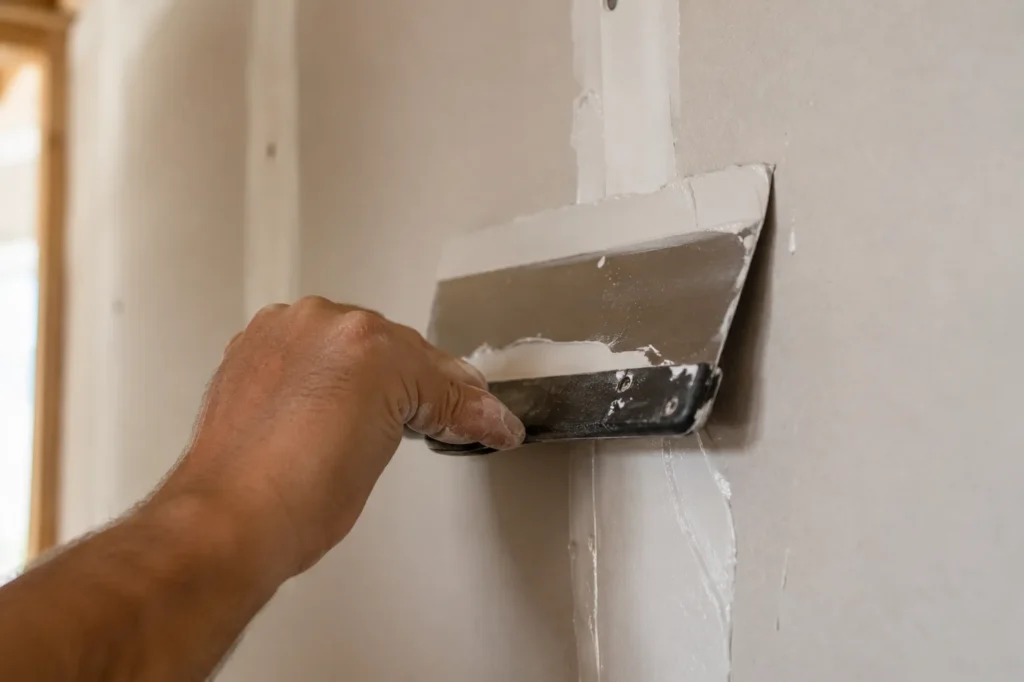
Doing it yourself mainly saves you the labor line, not the materials line:
- DIY (materials only): $0.75–$1.25 per sq ft — you’re still buying the same panels, tape, compound, and screws
- Professional (materials + labor): $1.50–$3.50 per sq ft
That’s a realistic 40–65% savings by doing the work yourself, in line with what most contractors quote for labor’s share of the job. What that savings doesn’t account for: a lift rental if you’re doing ceilings, the learning curve on getting seams invisible under paint, and the time cost of a job that takes an experienced two-person crew 4–5 days but often takes a first-timer noticeably longer. Hanging sheets is genuinely DIY-friendly; getting a Level 4 finish invisible under flat paint is the part most first-timers underestimate.
How to Price or Bid a Drywall Job
If you’re a contractor pricing work, or a homeowner sanity-checking a quote, the standard process looks like this:
- Measure accurately. Wall area = perimeter × height, per room. Ceiling area = length × width. Add both together.
- Subtract openings. Standard doors ≈ 21 sq ft, standard windows ≈ 15 sq ft each.
- Apply a waste factor. 10% for simple rectangular rooms; 15–20% for rooms with lots of corners, angles, or cutouts.
- Price materials and labor separately using the phase breakdown above, rather than one blended number — it’s the only way to spot where a quote is inflated.
- Add overhead and profit if you’re the one bidding the job — typically 10–20% on top of hard costs.
- Put it in writing — scope, finish level, and exclusions (priming, painting, and texture are frequently quoted separately).
Two Mistakes That Blow the Drywall Budget
1. Underestimating the waste factor. Buying exactly the square footage you measured, with zero buffer, guarantees a mid-project supply run — and running out of material from the same batch can cause a visible texture or shade mismatch on repeat trips. Build in 10% minimum, 15–20% for complex rooms.
2. Skipping back-blocking at butt joints. Where two sheet ends meet away from a stud, that seam has nothing solid behind it to hold fasteners unless you add backing. On a real job this means screwing a scrap strip of 1/2″ plywood or OSB behind the joint before the second sheet goes up — or using a commercial back-blocking product like Trim-Tex Butt Boards or a Wilco RockSplicer, which recess the joint slightly so it tapes like a factory edge instead of a flat butt seam. Skip it, and that joint is the first place a crack or ridge shows up — usually within the first year, once a heating season dries the framing out. It adds roughly 15 minutes per joint and eliminates the most common callback in the trade.
Drywall vs. Sheetrock vs. Plasterboard
There’s no cost difference — these are the same product under different names. “Sheetrock” is a trademarked brand name (owned by USG) for gypsum board that became so common it’s used generically, the same way “Kleenex” means tissue. “Plasterboard” is the UK/Australian term for the identical material. Whatever your contractor calls it, you’re buying and paying for the same gypsum panel product.
3/8″ vs. 1/2″ Drywall: Which Do You Need?
1/2″ is the standard choice for most residential walls — it meets typical fire and sound codes and is what most suppliers stock as default. 3/8″ is thinner, lighter, and slightly cheaper, but offers less fire and sound resistance; it’s mainly used for re-covering existing walls or ceilings (where added weight or thickness is a concern) rather than new construction. If you’re unsure which your project calls for, check your local building code first — some jurisdictions specify minimum thickness by room type (garages and shared walls often require 5/8″ fire-rated Type X regardless).
Ways to Lower Your Drywall Cost
- Use standard 4×8 sheets in small rooms — 4×12 sheets reduce seams but cost more and need two people to handle safely.
- Choose Level 4 over Level 5 finish unless you’re using glossy paint or have harsh raking light — Level 5 nearly doubles finishing labor.
- Hang it yourself, hire out the finishing — a common split that saves labor cost on the physically easy part while leaving the skill-dependent taping and sanding to a pro.
- Get three quotes minimum. The spread between the highest and lowest qualified bid on interior finish work commonly runs 20–35%.
- Buy in full-sheet quantities rather than piecemeal — most suppliers price per-sheet delivery breaks at 10+ sheet quantities.
Frequently Asked Questions
(Paste this section into Rank Math’s FAQ block — it auto-generates FAQPage schema, so don’t duplicate it in Section 1’s JSON-LD.)
How much does it cost to install drywall? Drywall installation costs $1.50 to $3.50 per square foot installed in 2026, including materials and labor to a standard Level 4 finish. The 2026 national average sits around $2.40–$2.50 per sq ft.
How much does 1,000 sq ft of drywall cost? Between $1,500 and $3,500 for full professional installation of 1,000 sq ft of drywall surface — not to be confused with a 1,000 sq ft house, which needs roughly 3,000–4,000 sq ft of actual drywall panels once walls and ceilings are counted.
How much is labor to install drywall? Labor alone runs $0.75 to $2.25 per square foot, covering hanging, taping, mudding, and sanding. Hanging alone (no finishing) runs $0.25–$0.50 per sq ft.
How much does it cost to drywall a 20×20 room? Roughly $1,500 to $3,500 including walls and ceiling, since a 20×20 room with an 8 ft ceiling works out to almost exactly 1,000 sq ft of drywall surface.
How much is it to drywall a 12×12 room? Approximately $720 to $1,680 for walls and ceiling combined, based on roughly 480 sq ft of net drywall surface at $1.50–$3.50 per sq ft installed.
Is it cheaper to do a drop ceiling or drywall? Drywall is cheaper upfront ($1.50–$3.00/sq ft vs. $2.00–$5.00+/sq ft for a drop ceiling), but a drop ceiling offers much easier access to wiring, plumbing, and HVAC — a common reason basements use drop ceilings despite the higher material cost.
What are two common mistakes made during drywalling? Underestimating the waste factor (leading to shade-mismatched supply runs) and skipping back-blocking at butt joints (the leading cause of cracked seams within the first year).
How do I price a drywall job? Measure wall and ceiling area, subtract standard door/window openings, apply a 10–20% waste factor, then price materials and labor as separate line items rather than one blended rate — that separation is what lets you sanity-check any quote you receive.
How long does it take to drywall a 2,000 sq ft house? A two-person professional crew typically completes hanging, taping, and finishing in 4–7 working days for a 2,000 sq ft home, depending on layout complexity and finish level; a first-time DIYer should expect meaningfully longer.
Is it cheaper to do drywall yourself? Yes — DIY saves the labor portion of the cost, roughly 40–65% off the fully installed price, since you’re still paying full price for materials ($0.75–$1.25/sq ft) either way.
Which is cheaper, sheetrock or drywall? Neither — they’re the same product. “Sheetrock” is a trademarked brand name for gypsum board that’s become a generic term; there’s no cost difference between “sheetrock” and “drywall.”
Should I use 3/8″ or 1/2″ drywall for walls? Use 1/2″ for standard new-construction walls — it’s the code-typical default. 3/8″ is lighter and slightly cheaper but offers less fire/sound resistance, and is mainly used to re-cover existing surfaces rather than for new walls.
What is the difference between sheetrock and drywall? None in practice — “Sheetrock” is USG’s trademarked brand name for the gypsum board product that the industry generically calls “drywall,” similar to how “Kleenex” is used generically for tissue.
How much should I charge to install a sheet of drywall? For hanging only, $8–$16 per standard 4×8 sheet is typical. For a full install (hang, tape, and finish), expect $48–$112 per sheet depending on your local labor market and finish level.
Does Home Depot install drywall? Home Depot doesn’t employ its own installation crews directly but connects customers to vetted local contractors through its Home Services program for drywall hanging and finishing; pricing follows standard local market rates rather than a fixed Home Depot rate.
Estimates on this page are national planning ranges based on 2026 industry benchmarks and are not a substitute for a written quote from a licensed contractor in your area. For a full construction cost estimate that includes drywall alongside every other build category, try our free House Build Cost Calculator.

Michael is a construction cost analyst with a focus on residential building projects. He researches current material prices, labor rates, and building code compliance to help homeowners understand true construction costs. Michael maintains our database of regional pricing trends and construction estimating data.