Spray Foam Insulation Cost in 2026: The Complete Pricing Guide
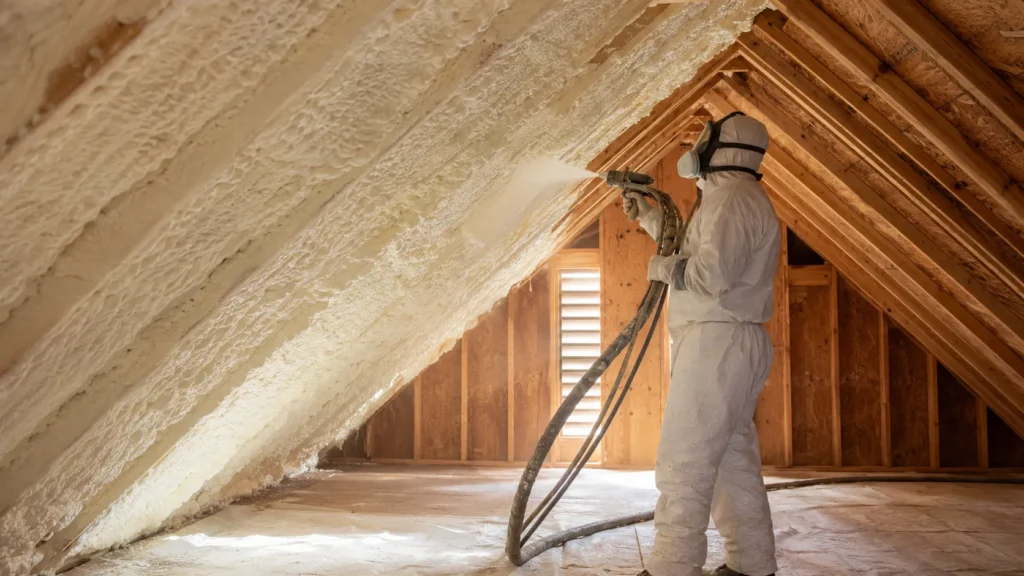
Spray foam insulation costs $1.00 to $5.00 per square foot installed in 2026. Open-cell foam sits at the low end ($1.50–$3.50/sq ft). Closed-cell foam sits at the high end ($3.00–$5.00/sq ft). Most homeowners spend $1,500 to $6,000 on a single-area project like an attic or crawl space, and $10,000 to $25,000+ for whole-house closed-cell coverage.
That’s the number the industry’s major cost-guide aggregators — Angi and HomeGuide — converge on across thousands of contractor-reported jobs. Everything below explains why your specific project might land anywhere in that range, and where you can safely cut cost without cutting performance.
Quick Answer: Spray Foam Insulation Cost at a Glance
| Project | Typical Cost |
|---|---|
| Cost per sq ft (open-cell) | $1.50 – $3.50 |
| Cost per sq ft (closed-cell) | $3.00 – $5.00 |
| Average attic (1,000–1,500 sq ft) | $2,500 – $7,500 |
| Garage (2-car, closed-cell) | $3,000 – $8,000 |
| Crawl space | $1,200 – $6,900 |
| Basement rim joist/walls (per 1,000 sq ft) | $500 – $3,000 |
| Whole house (new construction) | $10,000 – $25,000+ |
| DIY kit (200–600 board feet) | $350 – $1,600 |
| Removal of old spray foam | $1.50 – $12.00 per sq ft |
Figures reflect national averages compiled from Angi and HomeGuide contractor-reported cost data for 2026. Your actual quote will vary by region, home accessibility, and local labor rates.
Open-Cell vs. Closed-Cell Spray Foam Insulation Cost
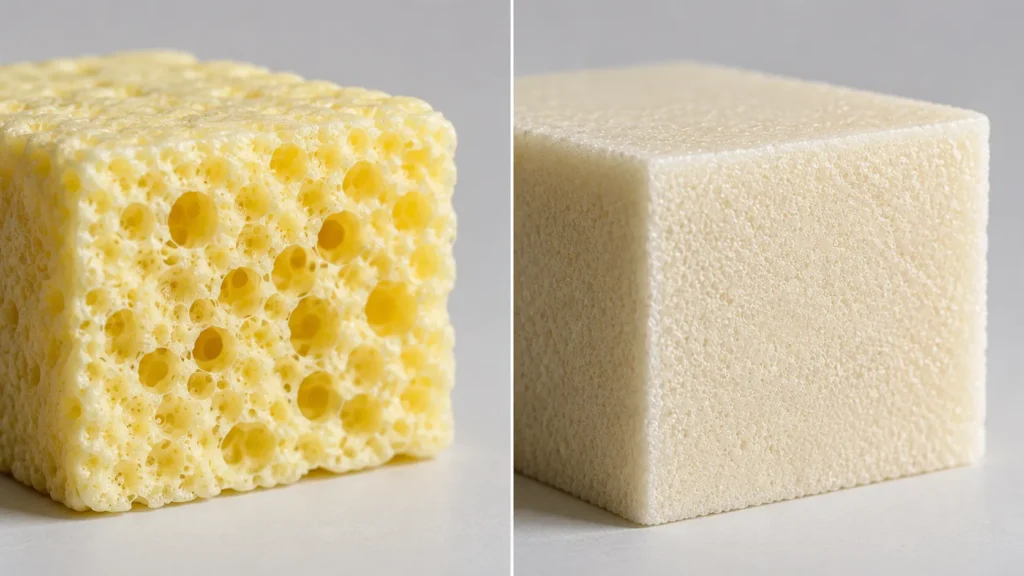
This is the single biggest factor in your quote, so get it straight before you call a contractor.
Open-cell spray foam costs $1.50 to $3.50 per square foot installed. It has an R-value of about 3.5 to 3.7 per inch, expands more during application, and works well for interior walls and sound dampening. It’s lighter, softer, and doesn’t block moisture — so it usually needs a separate vapor barrier in humid climates or exterior applications, adding $2 to $4 per square foot.
Closed-cell spray foam insulation cost runs $3.00 to $5.00 per square foot installed — roughly double open-cell pricing. You’re paying for a denser material with an R-value of 6 to 7 per inch (per the U.S. Department of Energy’s insulation guidance), which means you need less thickness to hit the same performance target. Closed-cell also acts as its own vapor barrier and adds real structural rigidity — third-party testing has shown it can increase wall racking strength significantly, which is why it’s the default choice for pole barns and metal buildings.
Bottom line: if you’re insulating an interior wall for soundproofing, open-cell is the economical choice. If you’re insulating a roof deck, crawl space, exterior wall, or anywhere moisture is a risk, closed-cell’s higher upfront cost usually pays for itself by skipping the separate vapor barrier line item.
Cost Per Board Foot (How Contractors Actually Quote)
Spray foam is measured in board feet — one square foot at one inch of thickness. This matters because “per square foot” pricing you see online usually assumes a specific thickness, and your project might need more or less.
| Foam Type | Cost per Board Foot | R-Value per Inch |
|---|---|---|
| Open-cell | $0.40 – $1.75 | 3.5 – 3.7 |
| Closed-cell | $1.00 – $3.10 | 6.0 – 7.0 |
Multiply your square footage by your required thickness (in inches) to get total board feet, then multiply by the per-board-foot rate. A 1,000 sq ft attic sprayed at 3 inches of closed-cell needs 3,000 board feet — which is why attic quotes swing so widely based on the R-value target for your climate zone.
Spray Foam Insulation Cost by Area of the Home
Square footage alone doesn’t determine your quote — where the foam goes changes both the labor and the recommended thickness.
Attic: Attic spray foam insulation cost runs $1,100 to $9,000, with most 1,000–1,500 sq ft attics landing between $2,500 and $7,500. Steep or cut-up rooflines push you toward the top of that range because of the extra labor to spray around rafters and vents.
Garage: A typical 2-car garage runs $3,000 to $8,000 with closed-cell foam on walls and ceiling. If your garage sits under living space, spray foam insulation cost here also has to account for fire-rated thermal barrier requirements in most jurisdictions.
Crawl space: Expect $1,200 to $6,900 for a standard crawl space, according to Angi’s contractor-reported data. Closed-cell is the default here since it doubles as moisture and vapor control in a space that’s constantly exposed to ground moisture.
Basement: Basement spray foam insulation, usually applied to rim joists and foundation walls, runs $500 to $3,000 per 1,000 sq ft, including labor.
Roof deck: This is the most labor-intensive application — expect $4 to $7 per square foot for closed-cell on an unvented roof assembly, largely due to overhead spraying difficulty and the thicker code-required coverage.
Pole barns and metal buildings: These structures almost always spec closed-cell for its combination of vapor control and structural rigidity against the metal skin. Pricing tracks the standard closed-cell range ($3.00–$5.00/sq ft), though large open-span buildings can access volume pricing that brings the effective rate down.
What Determines Your Spray Foam Insulation Cost
Five variables move your number more than anything else:
- Foam type. Open-cell vs. closed-cell alone creates a 2x price spread, covered above.
- Required thickness (R-value target). The DOE and the 2021 International Energy Conservation Code (IECC) set minimum R-values by climate zone — typically R-30 to R-60 for attics and R-13 to R-21 for walls. Colder zones need thicker foam, which directly raises board-foot count and cost.
- Project size and minimums. Most insulation contractors carry a $1,000 to $2,000 minimum job fee, so a small 200 sq ft job often costs nearly as much per square foot as a 1,000 sq ft job.
- Existing insulation removal. If you’re replacing old fiberglass, cellulose, or foam, add $1.00 to $2.50 per square foot for standard removal — more if mold or pests are involved (see the removal section below).
- Accessibility. Tight crawl spaces, low attic clearance, and finished walls that require cutting into drywall all add labor hours. New construction is consistently the cheapest scenario because wall cavities are wide open.
DIY Spray Foam Insulation Cost vs. Professional Installation
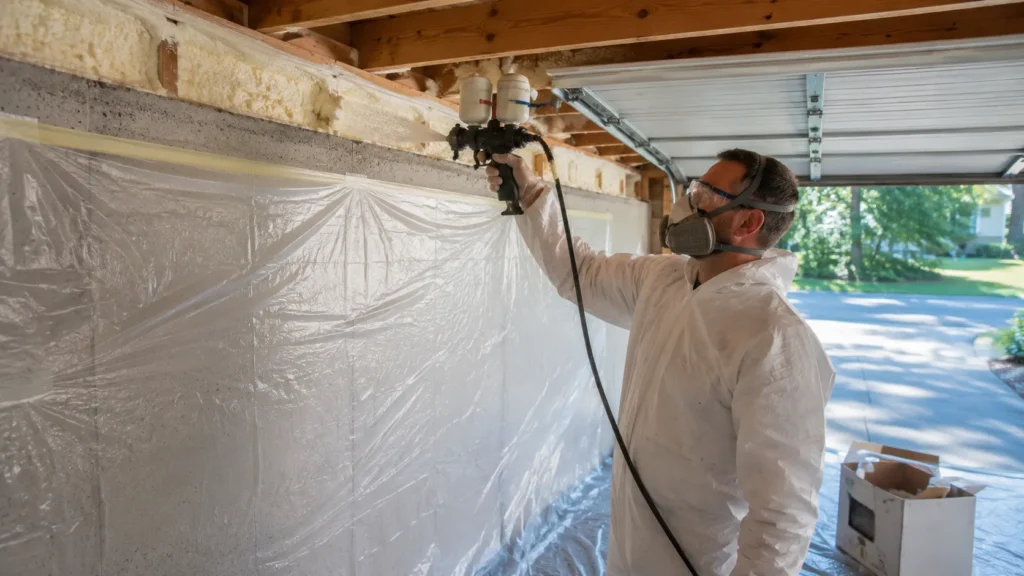
Search interest in DIY spray foam kits has spiked hard recently — Google Trends currently flags “diy spray foam insulation kit” as a breakout query, with “spray foam insulation kit” search interest up 100% week-over-week. If you’re one of the homeowners driving that trend, here’s what you’re actually signing up for.
DIY kit pricing:
| Kit Size | Coverage | Typical Price |
|---|---|---|
| Small (12–15 board feet) | Crack/gap sealing only | $40 – $70 |
| 200 board feet | ~200 sq ft at 1″ thick | $350 – $800 |
| 600 board feet | ~600 sq ft at 1″ thick | $650 – $900 |
| 1,200 board feet | ~1,200 sq ft at 1″ thick | $1,100 – $1,600 |
Kits from brands like Tiger Foam, Touch ‘n Foam, and Dow FROTH-PAK are sold at Home Depot, Lowe’s, and directly through manufacturer sites. Material cost alone runs $0.50 to $2.00 per square foot — well under the $1.00–$5.00/sq ft professional rate.
The catch: that coverage figure assumes 1 inch of thickness. Most projects need 2 to 3 inches to actually achieve an air seal, which cuts your real coverage by two-thirds to a third of the advertised board footage. Factor in safety gear ($75–$150 for a respirator, suit, and goggles), surface prep materials, and wasted foam from the learning curve, and a DIY project can close the cost gap with professional installation faster than expected — especially past the 500 sq ft mark, where most cost guides start recommending you hire a pro instead.
Where DIY makes sense: rim joists, small crawl space sections, sealing around windows/doors, and patch jobs under 500 sq ft. Where it doesn’t: full attics, whole-wall cavities, or anything requiring precise, code-compliant R-value — professional rigs apply foam faster, more evenly, and with equipment DIY kits can’t match.
Spray Foam Insulation Cost vs. Fiberglass and Blown-In Insulation
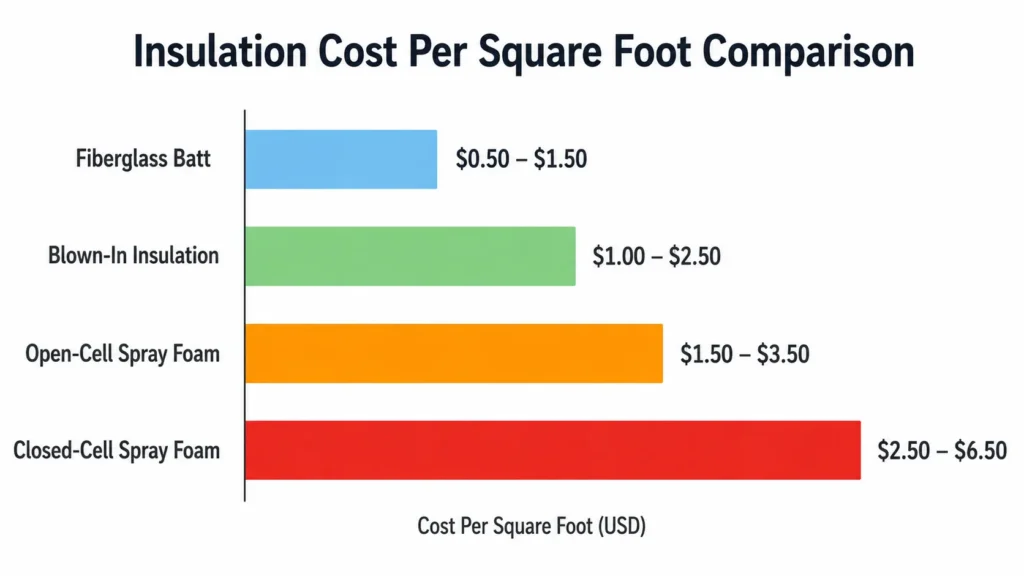
| Insulation Type | Cost per Sq Ft | R-Value per Inch | Air Sealing |
|---|---|---|---|
| Spray foam (open-cell) | $1.50 – $3.50 | 3.5 – 3.7 | Excellent |
| Spray foam (closed-cell) | $3.00 – $5.00 | 6.0 – 7.0 | Excellent |
| Fiberglass batt | $0.30 – $1.50 | 3.0 – 4.0 | Poor (gaps common) |
| Blown-in fiberglass/cellulose | $1.00 – $2.80 | 2.2 – 3.8 | Fair |
Fiberglass wins on sticker price, and on paper, its R-value per inch isn’t far behind open-cell spray foam. But R-value tests are conducted in a lab, not in your actual wall. Real-world studies from Oak Ridge National Laboratory found that fiberglass batts installed in the field achieve only 60–70% of their rated R-value because of gaps, compression, and convective air movement — a problem spray foam’s monolithic air seal simply doesn’t have. That’s the real reason spray foam commands 2–3x the price of fiberglass and still gets specified in energy-conscious builds.
Spray Foam Insulation Removal Cost
If you’re replacing old insulation, don’t assume it’s a cheap step you can skip in your budget. Removal cost depends entirely on what you’re removing:
| Old Insulation Type | Removal Cost per Sq Ft |
|---|---|
| Blown-in (fiberglass/cellulose) | $1.00 – $1.50 |
| Fiberglass batts | $1.00 – $2.00 |
| Spray foam | $1.50 – $12.00 |
| Rigid foam board | $1.50 – $2.25 |
| Asbestos-containing insulation | $10.00 – $25.00 (licensed abatement required) |
Spray foam is the most expensive insulation type to remove — sometimes more expensive than installing new insulation in the first place — because it bonds permanently to whatever it touches. There’s no vacuuming it out like loose-fill; it has to be scraped, cut, or ground off by hand. Homeowners on contractor forums have reported quotes of $4,000–$15,000 to strip foam from a single 1,300 sq ft attic. If you’re removing spray foam specifically because of a bad DIY application or improper cure, get an on-site quote before committing to a removal date — this is the one insulation cost that’s genuinely hard to estimate over the phone.
Is Spray Foam Insulation Worth the Cost?
For most homeowners, yes — with one condition: you’re staying in the home long enough to hit the payback window.
Spray foam’s air-sealing performance typically cuts heating and cooling costs by 20% to 30%, and multiple industry cost guides put the payback period at 5 to 10 years depending on your climate and current insulation baseline. If you’re insulating a forever home, a rental you’re holding long-term, or a new build, the 2–3x upfront premium over fiberglass is a straightforward investment. If you’re insulating a home you plan to sell within 2–3 years, the ROI math gets tighter — though air sealing and improved comfort still show up as a selling point in an inspection.
The exception is over-insulating: R-value follows a law of diminishing returns. Once you’ve hit your climate zone’s IECC-recommended R-value, spending more to exceed it rarely pays back in energy savings — put that budget toward air sealing elsewhere in the building envelope instead.
How to Calculate Your Spray Foam Insulation Cost
- Measure your square footage. Multiply length × width for each surface you’re insulating (walls, ceiling, floor — whichever apply).
- Determine your required R-value. Check your climate zone against IECC/DOE recommendations (typically R-30–R-60 for attics, R-13–R-21 for walls).
- Convert R-value to thickness. Divide your target R-value by the foam’s R-value per inch (3.5–3.7 for open-cell, 6.0–7.0 for closed-cell).
- Calculate board feet. Multiply square footage × thickness in inches.
- Apply your rate. Multiply board feet by the per-board-foot cost ($0.40–$1.75 open-cell, $1.00–$3.10 closed-cell) and add labor if hiring a pro.
Don’t want to run the math by hand? Use the calculator below to plug in your square footage and get an instant estimate for both foam types.
Frequently Asked Questions
How much does spray foam insulation cost per square foot? Professionally installed spray foam insulation costs $1.00 to $5.00 per square foot in 2026. Open-cell runs $1.50–$3.50/sq ft; closed-cell runs $3.00–$5.00/sq ft.
How much does it cost to spray foam an entire attic? Between $1,100 and $9,000, with most 1,000–1,500 sq ft attics falling between $2,500 and $7,500.
Is closed-cell or open-cell spray foam cheaper? Open-cell is cheaper ($1.50–$3.50/sq ft) than closed-cell ($3.00–$5.00/sq ft) because it’s less dense and has a lower R-value per inch.
How much does a DIY spray foam insulation kit cost? $80 to over $1,000 depending on coverage. A 200 board-foot kit typically runs $350–$800.
How much does spray foam insulation removal cost? $1.50 to $12.00 per square foot — the most expensive insulation type to remove because it must be scraped or ground off by hand.
Is spray foam insulation worth the extra cost compared to fiberglass? For most homeowners planning to stay in the home 5+ years, yes — spray foam typically cuts heating/cooling costs 20–30%, paying back the upfront premium within 5–10 years.
Does spray foam insulation cost more for metal buildings or pole barns? Not inherently more per square foot — closed-cell foam is standard for these structures regardless, priced in the normal $3.00–$5.00/sq ft closed-cell range. Large open-span buildings can sometimes access volume pricing.
What’s the cheapest way to insulate with spray foam? DIY open-cell kits for small, accessible areas (rim joists, small crawl space sections) under 500 sq ft. Beyond that threshold, professional installation usually becomes more cost-effective per square foot once you account for wasted material and safety gear.
SOURCES
- U.S. Department of Energy — Energy Saver insulation guidance (energy.gov/energysaver) — R-value per inch, climate zone recommendations
- 2021 International Energy Conservation Code (IECC), Table R402.1.2 — minimum R-value by climate zone
- U.S. Bureau of Labor Statistics — Producer Price Index, May 2026 release — context on rising industrial chemical/plastics resin input costs affecting foam material pricing
- Angi (angi.com) — contractor-reported cost-per-square-foot and by-area pricing
- HomeGuide (homeguide.com) — contractor-reported cost-per-square-foot and DIY kit pricing
- Oak Ridge National Laboratory — real-world fiberglass batt R-value performance data (referenced via multiple industry technical guides citing ORNL field studies)

Michael is a construction cost analyst with a focus on residential building projects. He researches current material prices, labor rates, and building code compliance to help homeowners understand true construction costs. Michael maintains our database of regional pricing trends and construction estimating data.